Toward a Dramaturgical Sensibility begins with a moment in Shakespeare’s Antony and Cleopatra in which Cleopatra says to Antony, “Not know me yet?” With these words Cleopatra poses a simple but fundamental human problem: What can we know? She and Anthony have known each other for years, at times gloriously — emotionally, mentally, and in the archaic sense of the word, physically — but still the challenge of knowing hangs in the air. Cleopatra’s question reminds us that knowledge is not simple: that it is as likely to create yearning as satisfaction; that it is not confined to any one part of the self; that it is far from intellect alone. It reminds us — as do most great plays — that life is part wonder, part terror.
What can we know? This study — aimed at students, teachers, and theater artists — argues the centrality of the question to dramaturgs, dramaturgy, and a dramaturgical sensibility. It suggests — from two perspectives, Landscape (Part I) and Journey (Part II) — that the attempt to know the dramaturgy of a play is little different from the attempt to know another human being.
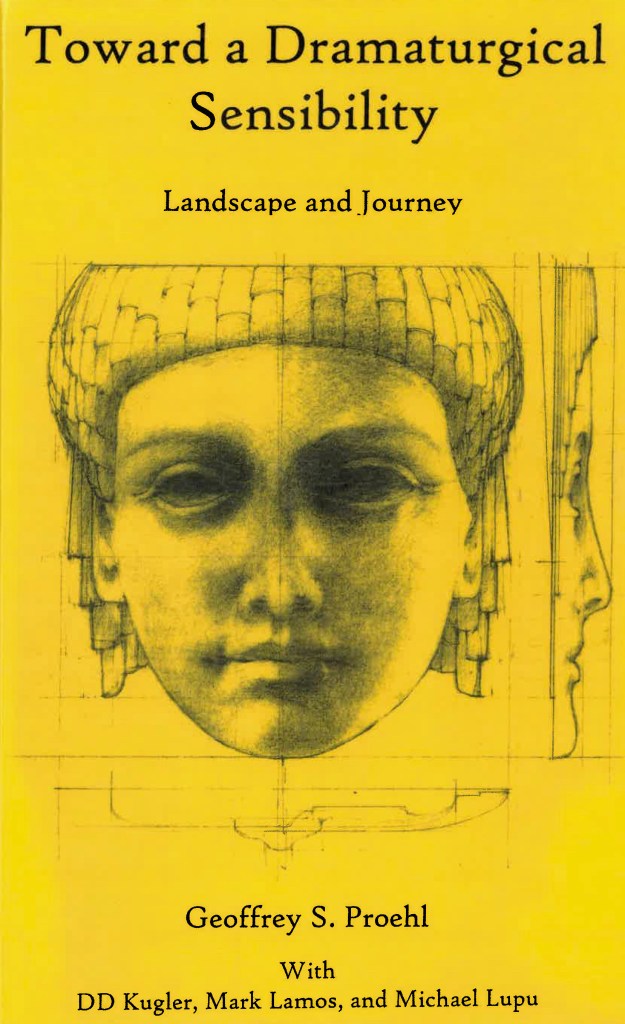
The willingness to enter into a conversation on the edge of the known and unknown is central to a dramaturgical sensibility. Chapter 1 surveys this landscape, using conversation to better understand conversation, whether with a play or collaborators. Chapter 2 explores ways in which pleasure guides and informs knowledge by focusing first on the landscape of time, particularly how time makes all pleasure (and pain) temporary, and then on the landscape of research, particularly the ambivalence among dramaturgs that this word and its connotation’s creates. Chapter 3 looks at ways of understanding the pattern that is a play’s dramaturgy. In doing so, it surveys methods of dramaturgical analysis and the role of methodology itself.
Part II moves to rehearsals for Antony and Cleopatra at the Guthrie Theater in the fall of 2001 and winter of 2002; directed by Mark Lamos with Laila Robins as Cleopatra, Robert Cuccioli as Antony, and Stephen Yoakum as Enobarbus. This case study follows that journey from first contact with script and production team to final preview. It opens onto the dramaturgy of a remarkable play as explored by artists willing to accept the challenges created by any serious encounter with the dramaturgy of a text. Part II uses those landscapes within a more or less chronological account of one particular journey. The chapters focus on how we engage, explore, and respond to the parts of a play and how they go together.
Available on Amazon.
 Geoff Proehl, Writer, Pacific Northwest